
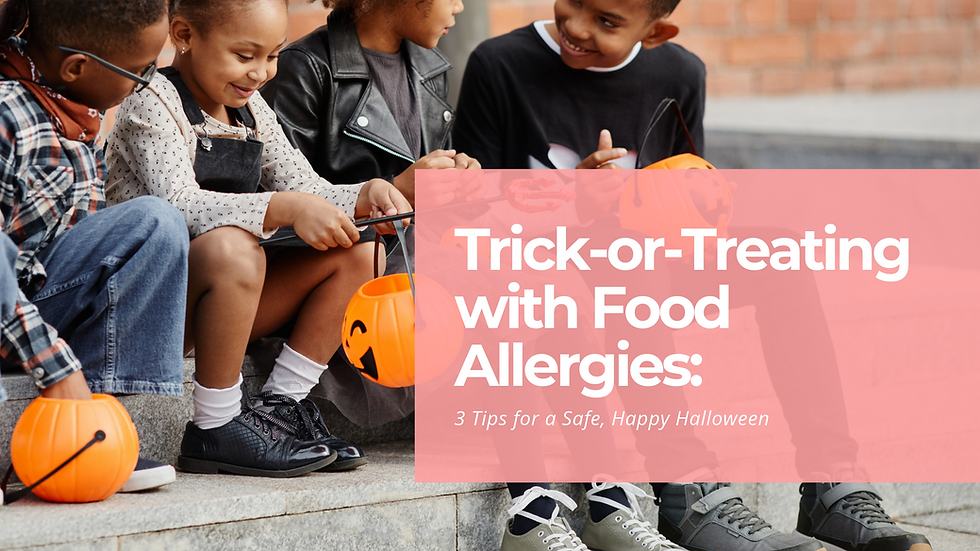
Trick-or-Treating with Food Allergies: 3 Tips for a Safe, Happy Halloween

(October 2026)
Written by Dr. Gina Dapul-Hidalgo, MD
Halloween can feel like a minefield when your child has a food allergy. Bowls of candy, unfamiliar treats and excited kids make it easy for a hidden allergen to slip through. The good news: with a little planning, your child can enjoy every bit of the costumes, the neighborhood walk and the thrill of a full bag. Here are my top three tips for a safe, happy night.
1. No eating on the route: inspect every treat at home
Make "nothing until we check" the rule before you leave the house. Hungry kids grab candy fast, so bring a safe snack from home for the walk.
Once you're back, sort the haul together in good light:
Read every label, every time. Recipes change, and a favorite brand may have added an allergen since last year.
Watch out for fun-size candy. Miniatures are often made on different lines than full-size bars and may contain different ingredients or cross-contact warnings. Many have no individual label at all.
When in doubt, leave it out. Unlabeled, homemade or unwrapped treats go straight to the "no" pile.
Plan a swap. A "Switch Witch" or trade-in for a toy, book or safe candy keeps the night fun instead of disappointing.
2. Look for teal pumpkins and put one out yourself
The Teal Pumpkin Project, led by Food Allergy Research & Education (FARE), invites households to place a teal-painted pumpkin on their doorstep. It signals that non-food treats are available, so every child can join in.
Plan your route. FARE's online Teal Pumpkin map shows participating homes near you. Bethesda, Rockville and DC neighborhoods have more every year.
Join in. Set out a teal pumpkin with a separate bowl of non-food treats: glow sticks, stickers, bubbles, pencils, bouncy balls or mini toys. Keep them apart from any candy to avoid cross-contact.
Spread the word. Share it with neighbors, your HOA or your child's school. It also helps kids with diabetes, celiac disease, feeding tubes and other dietary needs.
3. Carry epinephrine and know your plan
Even the best precautions can fail, so be ready to act quickly.
Bring two doses of epinephrine on the walk, plus your child's Anaphylaxis Emergency Action Plan. Keep auto-injectors out of extreme cold and in an easy-to-reach pocket, not buried in the candy bag.
Make sure every adult knows the plan. If your child trick-or-treats with friends, grandparents or another family, show the grown-ups the signs of a reaction and how to use the auto-injector.
Know the signs: hives, swelling of the lips or face, coughing or wheezing, vomiting, or sudden tiredness. If you suspect anaphylaxis, give epinephrine right away and call 911.
Mind the costume. Avoid masks that hide your child's face, and check face paint and costume makeup for allergens such as nut oils or latex.
Have a safe and spooky Halloween
A food allergy doesn't have to mean missing out. A clear plan, a teal pumpkin or two, and epinephrine on hand let your child focus on what matters most: the costume and the fun. If your child needs an updated Emergency Action Plan or an epinephrine refill before Halloween, call us at Family Center for Allergy and Asthma. We're happy to help.
— Dr. Gina Dapul-Hidalgo, board-certified allergist, Family Center for Allergy and Asthma


Comments